Felix Desjardins
ULTRA-PRIME ADVISORY | PHUKET & SAMUI
Phuket’s 10 Legacy Estates That Define the Luxury Property Market
Phuket’s luxury market is often reduced to listings, price points, and new launches. In reality, the structure of the market is defined by a much smaller group of estates that sit above the noise.
These are the developments that shaped the island’s upper tier. They established architectural language, created enduring locations, and set the tone for how ownership is approached at the top end of the market.
This is a selection of ten estates that have played a defining role in that evolution. It is not a comprehensive ranking, and it is not meant to be. Other projects could reasonably be included depending on the criteria applied. The objective here is narrower: to highlight the estates that continue to influence how value, scarcity, and desirability are understood in Phuket’s luxury residential market.
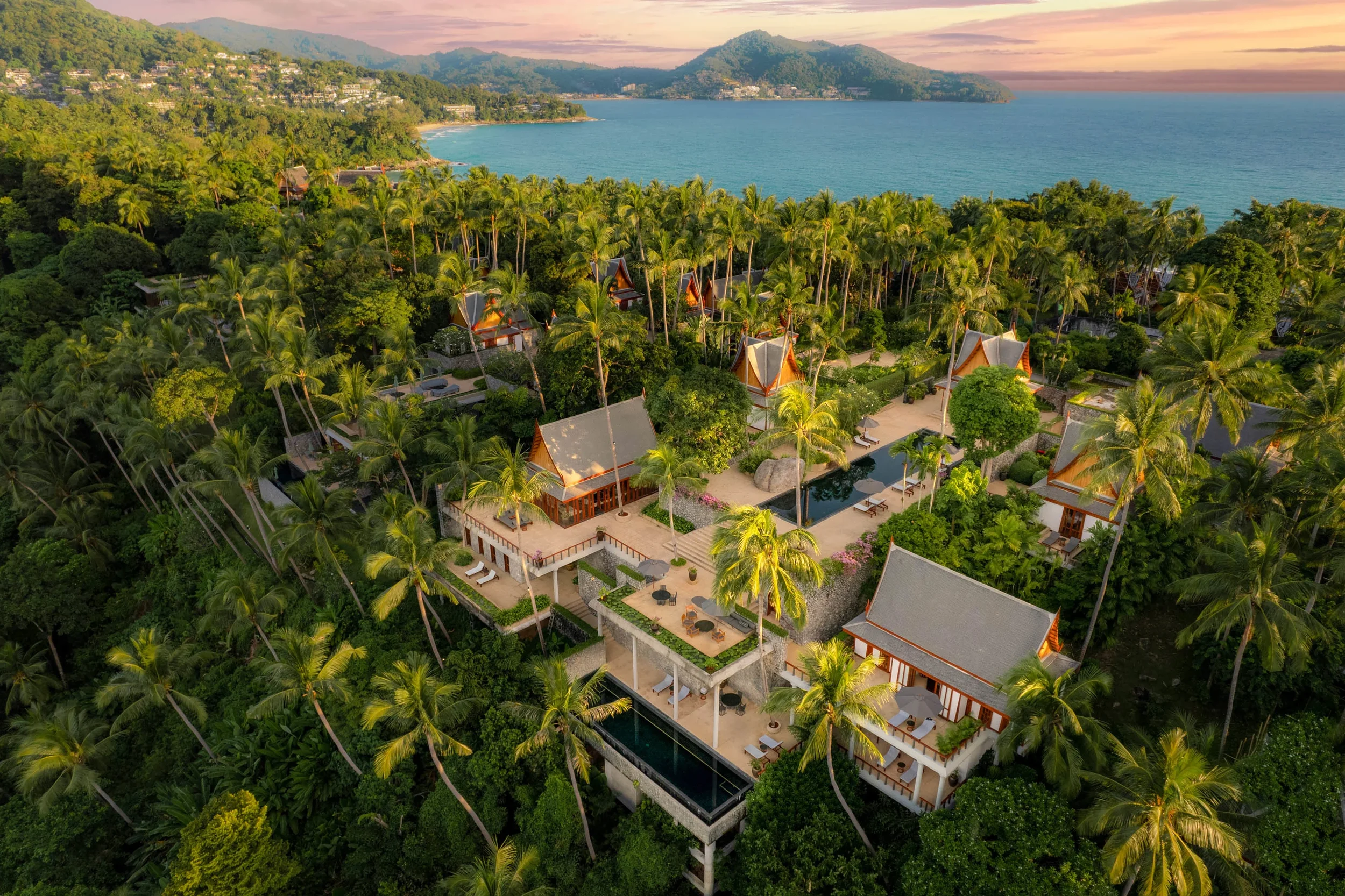
Amanpuri – the benchmark for ultra-prime real estate in Thailand, where transactions remain almost entirely off-market and ownership is generational.
1. Amanpuri
Overview
Amanpuri stands apart as the defining legacy estate in Phuket’s luxury property landscape. Opened in 1988 as the first Aman resort, it is widely regarded as the spiritual origin of the Aman brand and the place where the group’s philosophy of understated luxury first took shape. The estate was designed by renowned architect Ed Tuttle, whose work introduced an architectural language rooted in traditional Thai forms. Steeply pitched roofs, teak structures, and pavilion-style living spaces were arranged across a carefully preserved coastal headland overlooking the Andaman Sea. Over time, Amanpuri evolved into far more than a resort. Roughly forty private villas were developed across the estate, positioned around the original hotel and integrated into the surrounding coconut grove and hillside landscape. These residences have become some of the most discreet and tightly held properties in Phuket. Within the broader context of the island’s property market, Amanpuri represents a rare form of legacy ownership. Properties here are typically held for long periods by a small number of international families, and transactions are extremely infrequent. When they do occur, they are almost always handled privately and off-market. More than three decades after its opening, Amanpuri remains one of the most recognizable and historically significant luxury estates in Phuket, defined by an architectural language and ownership culture rooted in continuity and restraint.
Key Facts
Year opened: 1988
Developer: Adrian Zecha (Aman founder)
Architect: Ed Tuttle
Location: Pansea headland, west coast of Phuket
Estate composition: Aman resort + approximately 40 private villas
Architectural style: Traditional Thai–inspired pavilion architecture
Ownership structure: Protected leasehold structures combined with offshore holding companies
Transaction frequency: Extremely limited, often off-market
Why Amanpuri Matters
First Aman resort globally
Amanpuri was the founding property of the Aman group, which has since become one of the most respected ultra-luxury hospitality brands in the world.Established Phuket’s ultra-prime resort model
The development demonstrated that Phuket could support a level of hospitality and residential ownership comparable to the world’s most exclusive destinations.Architectural influence
Ed Tuttle’s design established a recognizable aesthetic that blended traditional Thai forms with modern luxury, influencing resort architecture across Asia.Long-term ownership culture
Unlike many newer developments where villas frequently change hands, Amanpuri properties tend to remain within families for extended periods.
Ownership Culture
A defining characteristic of Amanpuri is its unusually strong ownership culture. Many villas have remained with the same families for decades, contributing to a sense of continuity that is increasingly rare in resort destinations. This long-term stewardship reflects the nature of the estate itself. Amanpuri is not typically viewed as a speculative property investment but rather as a form of custodianship. Owners often maintain their residences in close alignment with the original architectural vision established by Ed Tuttle. Any architectural modifications within the estate are approached with considerable caution. Renovations and design changes are tightly controlled and carefully reviewed through an internal approval committee to preserve the timeless character of the resort. In recent years, some villas have undergone discreet modernization, including the addition of contemporary wellness features such as private gyms, sauna and ice bath facilities, and upgraded spa areas. In certain cases, additional structures have been introduced, but always within the strict framework of estate guidelines. This level of architectural discipline is extremely rare in tropical resort developments and remains one of the defining elements of Amanpuri’s enduring appeal. Changes are therefore approached slowly and with deliberate care, reflecting the same philosophy of restraint that shaped the estate’s original design. Another element reinforcing this continuity is the stability of the resort’s operational culture. Many members of the Amanpuri staff have worked at the estate for decades, creating a level of institutional memory and service familiarity that has become part of the estate’s identity.
Market Position Today
Within Phuket’s luxury property landscape, Amanpuri occupies a category of its own. Transactions are rare and most sales occur quietly through private networks rather than through public marketing channels. When properties do become available, they tend to attract a very specific type of buyer, often individuals already familiar with the Aman brand or long-time visitors to the resort. Because inventory is extremely limited and ownership turnover is low, Amanpuri remains one of the most tightly held residential environments in Phuket. The estate’s combination of architectural heritage, privacy, and institutional continuity continues to place it among the island’s most established and prestigious residential addresses.
Notable Characteristics
Teak pavilion architecture reflecting traditional Thai design principles
Strict preservation of the original architectural language, with renovations tightly controlled
Private headland setting overlooking Pansea Beach
Extensive preservation of the natural landscape, including mature coconut groves
Long-standing service culture, with many staff members employed for decades
Low transaction turnover, reinforcing the estate’s reputation for generational ownership
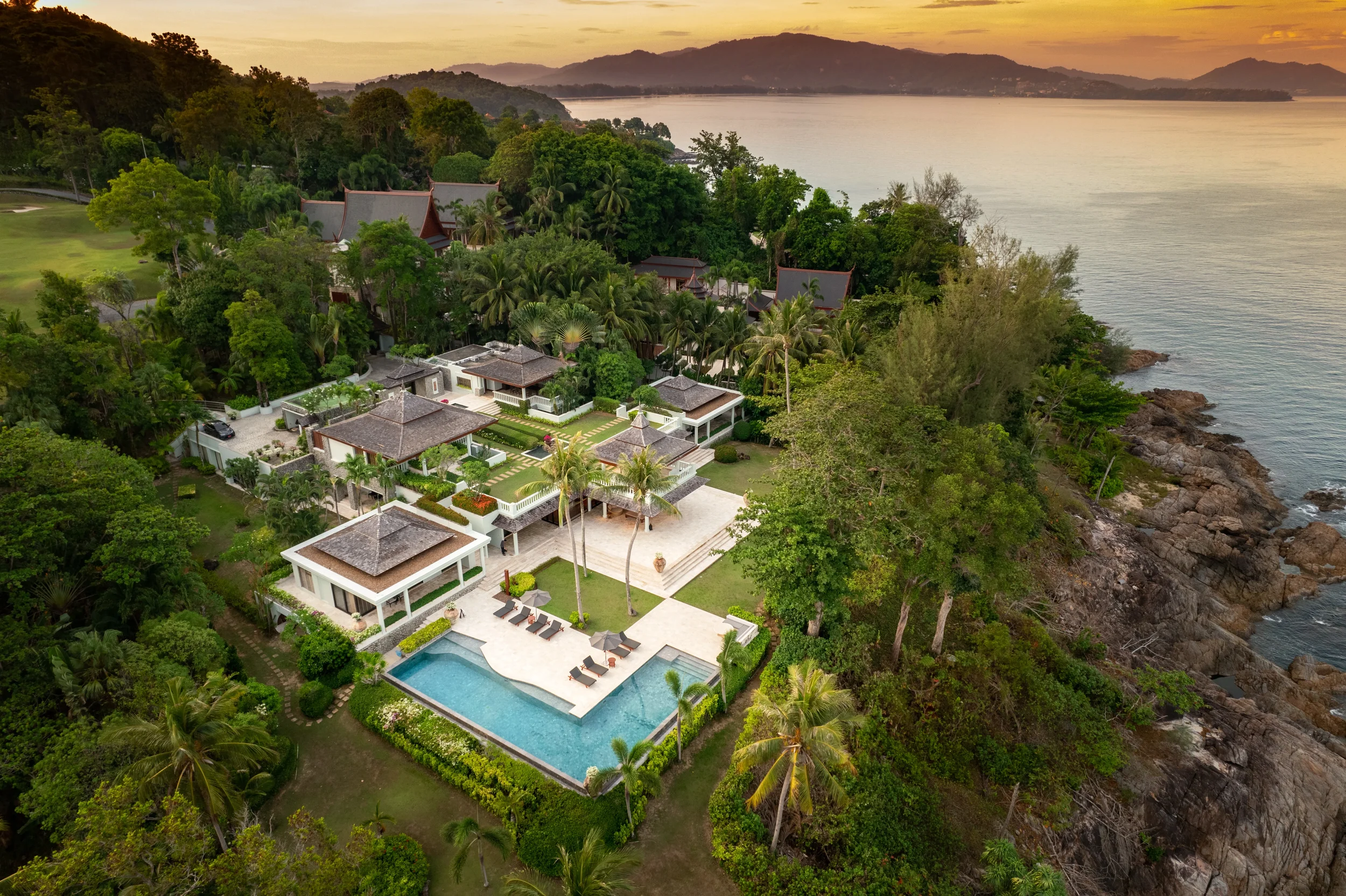
Trisara – a low-density oceanfront estate in Phuket where privacy, west-facing sunset views, and tightly held residences define its enduring appeal.
2.Trisara
Overview
Following the pioneering development of Amanpuri in the late 1980s, the early 2000s marked the next important phase in Phuket’s luxury property evolution. One of the most significant estates to emerge during this period was Trisara, which opened in 2004 on a secluded oceanfront hillside overlooking Naithon Beach on Phuket’s quieter northwest coast. Developed as a private pool-villa resort rather than a traditional hotel complex, Trisara was designed to emphasize privacy, natural landscape, and unobstructed ocean views. The estate stretches across a protected hillside overlooking the Andaman Sea, where the resort’s villas and privately owned residences are integrated into a broader coastal estate. Today, Trisara stands as one of Phuket’s most established resort-residential environments, combining full five-star hospitality services with a collection of privately owned villas positioned across terraced levels of the hillside.
Key Facts
Opening year: 2004
Location: Northwest coast of Phuket overlooking Naithon Beach
Estate size: Approximately 40 acres with roughly 2,000 meters of private coastline
Resort inventory: 39 hotel pool villas and suites
Private residences: Approximately 30 privately owned villas
Owner and operator: Montara Hospitality Group
Culinary distinction: PRU, Phuket’s first Michelin-starred restaurant
Ownership structure: Protected long-term leasehold arrangements, often held through offshore holding companies
Typical villa pricing: Approximately USD 3.5M to USD 30M+ depending on scale and location
Why Trisara Matters
Early integrated resort-residential model
Trisara helped establish the model of privately owned villas operating within a fully serviced luxury resort environment.Prime northwest coastline positioning
The estate occupies a secluded hillside overlooking Naithon Beach, an area known for its relative privacy and preserved natural landscape compared with Phuket’s more developed west-coast zones.Strong hospitality reputation
The presence of the resort and its culinary program, including the Michelin-starred PRU restaurant, has reinforced Trisara’s international reputation within the luxury hospitality landscape.Finite coastal land
The estate was developed across a clearly defined hillside site, leaving very little remaining land for new construction.
Ownership Culture
Although Trisara operates as a five-star resort, the estate has developed a distinct ownership culture among private villa owners. Residences are positioned across generous hillside plots designed to maximize privacy and uninterrupted ocean views. Many owners maintain their villas as private residences while occasionally participating in the resort’s rental program. This hybrid structure allows properties to benefit from the infrastructure and operational support of a luxury resort while preserving the independence of private ownership. Architecturally, the estate presents two recognizable design directions. Many villas feature distinctive terracotta-colored rooflines reminiscent of Balinese resort architecture, creating a recognizable visual identity across sections of the hillside. Other residences adopt more traditional Thai-inspired pitched roof forms that echo architectural elements seen in earlier luxury developments across Phuket. Together, these styles create a visually distinctive hillside environment where villas remain individually designed while still fitting coherently within the broader estate.
Market Position Today
Within Phuket’s luxury property market, Trisara occupies a distinctive position as one of the island’s most established resort-residential estates. The range of villa sizes within the development is unusually broad. Some residences are relatively compact two-bedroom villas, while the upper tier of the estate includes very large properties, including double-plot villas with expansive grounds and in some cases private beachfront access. Because of this diversity, property values vary widely depending on villa scale and location within the hillside estate. One notable characteristic of Trisara is the scarcity of remaining development land. In recent years, the final buildable plot within the estate was auctioned through Sotheby’s Concierge Auctions, with plans now underway for a small number of additional villas. Opportunities to build within an established ultra-luxury resort of this caliber are extremely rare within Phuket’s mature luxury property market. The ownership group behind Trisara has also expanded its presence in Phuket through Tri Vananda, a separate low-density wellness-focused residential community located inland from the resort. The project reflects Montara Hospitality Group’s broader focus on integrated wellness and hospitality development.
Notable Characteristics
Terraced hillside positioning overlooking the Andaman Sea
Ocean-facing orientation for nearly every villa within the estate
Integration of private residences with a five-star resort environment
Home to PRU, Phuket’s first Michelin-starred restaurant
Distinctive architectural identity combining terracotta-roof villas and Thai-inspired pitched roof forms
Ownership and management by Montara Hospitality Group
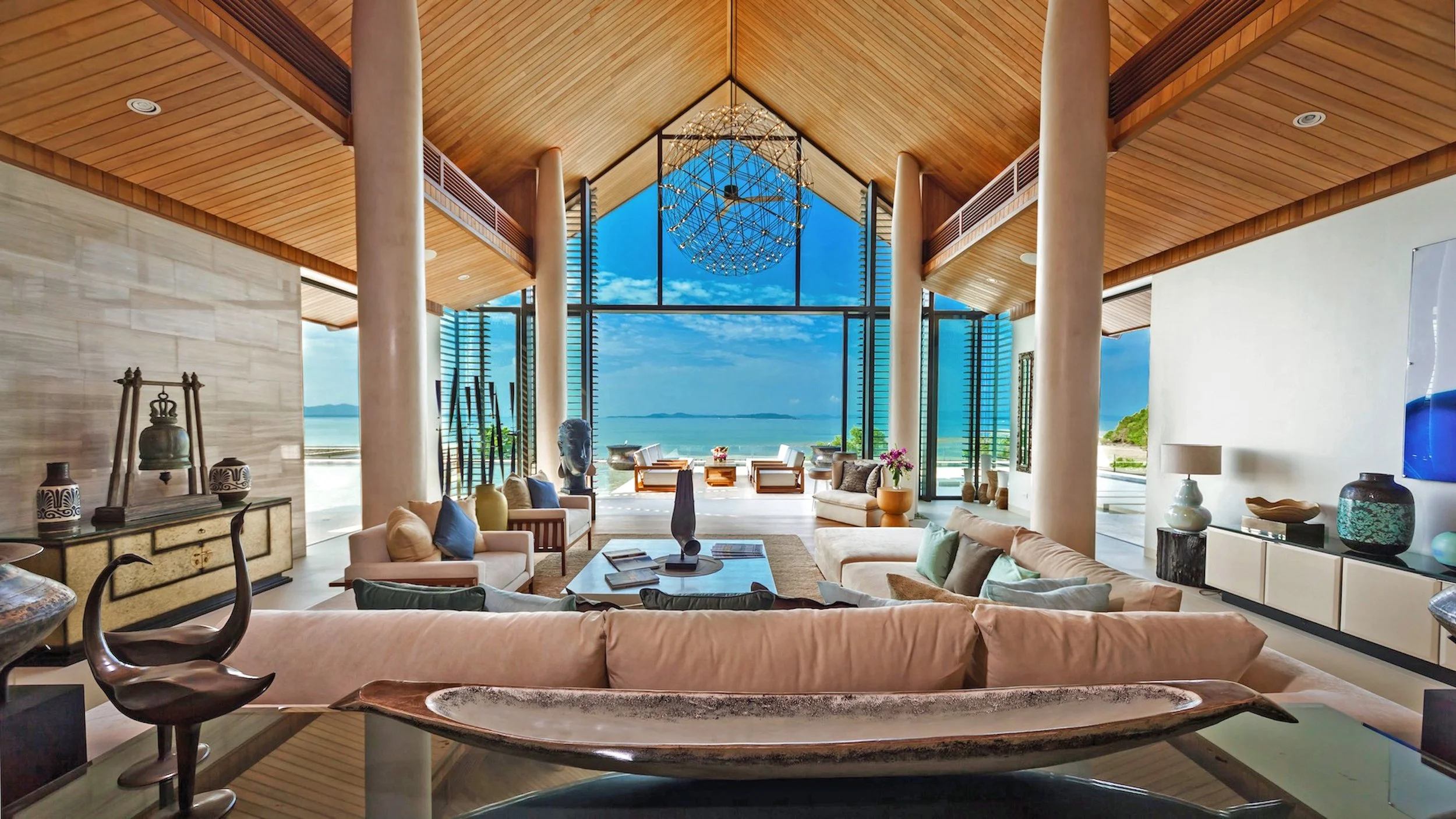
Cape Yamu – Phuket’s premier east-coast peninsula for large-scale modern estates, with select villas designed by Jean-Michel Gathy and Philippe Starck, defined by panoramic bay views and ultra-private compounds.
3.Cape Yamu (Cape Residences)
Overview
Cape Yamu represents the next phase in Phuket’s luxury residential evolution following the early-2000s developments such as Trisara. Development began in the mid-2000s and continued through the 2010s, transforming a dramatic peninsula on Phuket’s east coast into one of the island’s most distinctive contemporary villa estates. Unlike Phuket’s west-coast developments centered on sunset views, Cape Yamu faces the vast expanse of Phang Nga Bay. Villas sit along both sides of the peninsula’s ridge, overlooking a seascape defined by towering limestone karst islands rising from the water. The visual character is entirely different from the Andaman sunset coast and gives the estate a unique sense of scale and openness. Today, Cape Yamu stands as one of Phuket’s most architecturally ambitious villa environments, defined by large contemporary residences, dramatic arrival sequences, and some of the island’s most striking private estates.
Key Facts
Development period: Mid-2000s through the 2010s
Location: Yamu Peninsula, east coast of Phuket
Estate composition: Approximately 30 private villas
Architectural contributors: Jean-Michel Gathy and Philippe Starck (selected villas and interiors)
Resort presence: COMO Point Yamu resort opened in 2013
Additional enclave: The Headland, developed by Peter Hamilton
Typical villa pricing: Approximately USD 5M to USD 30M+ depending on scale and positioning
Why Cape Yamu Matters
Architectural pedigree
Several signature villas feature exterior architecture by Jean-Michel Gathy, whose work includes some of the most recognized luxury hospitality projects in the world.Design influence
Interiors of several villas were created by Philippe Starck, introducing a bold contemporary design language rarely seen in Phuket villa developments.Peninsula geography
The estate occupies a dramatic peninsula overlooking Phang Nga Bay, creating a landscape and visual identity completely distinct from Phuket’s west-coast resorts.Scale of private estates
Cape Yamu became known for large contemporary villas, many occupying expansive plots and featuring unusually ambitious design programs.
Ownership Culture
Cape Yamu differs from earlier estates such as Amanpuri or Trisara in that it functions primarily as a private villa community rather than a resort-anchored residential development. Residences across the peninsula vary significantly in scale and architectural expression. Owners have often pushed the boundaries of what a private villa in Phuket can contain. Some properties include indoor basketball courts, private squash courts, golf simulators, rock-climbing walls, beachfront tennis courts, and extensive spa and wellness areas. This flexibility has contributed to Cape Yamu’s reputation as one of Phuket’s most expressive luxury villa environments, where homes evolve over time and reflect the individual vision of their owners.
Market Position Today
Within Phuket’s luxury property landscape, Cape Yamu stands as one of the island’s most prominent contemporary villa estates. The peninsula contains roughly thirty villas, ranging from smaller residences to expansive double-plot estates with substantial built areas and highly customized amenities. Because of this diversity, values vary widely depending on scale, architecture, and positioning along the ridge. The COMO Point Yamu resort, opened in 2013, provides a luxury hospitality presence within the peninsula and further elevated the international visibility of the area. At the far end of the peninsula, a separate parcel was later developed into an ultra-private enclave known as The Headland. Developed by Peter Hamilton, one of the original developers behind Cape Yamu, this small cluster of monumental villas occupies some of the most dramatic headland positions in the region. Cape Yamu has also drawn international attention as one of the filming locations for the latest season of The White Lotus.
Notable Characteristics
Peninsula setting with panoramic views over Phang Nga Bay
Approximately 30 large private villas across the estate
Architectural contributions from Jean-Michel Gathy and Philippe Starck
COMO Point Yamu resort located within the peninsula
The Headland enclave developed by Peter Hamilton
Large contemporary villas featuring highly customized amenities
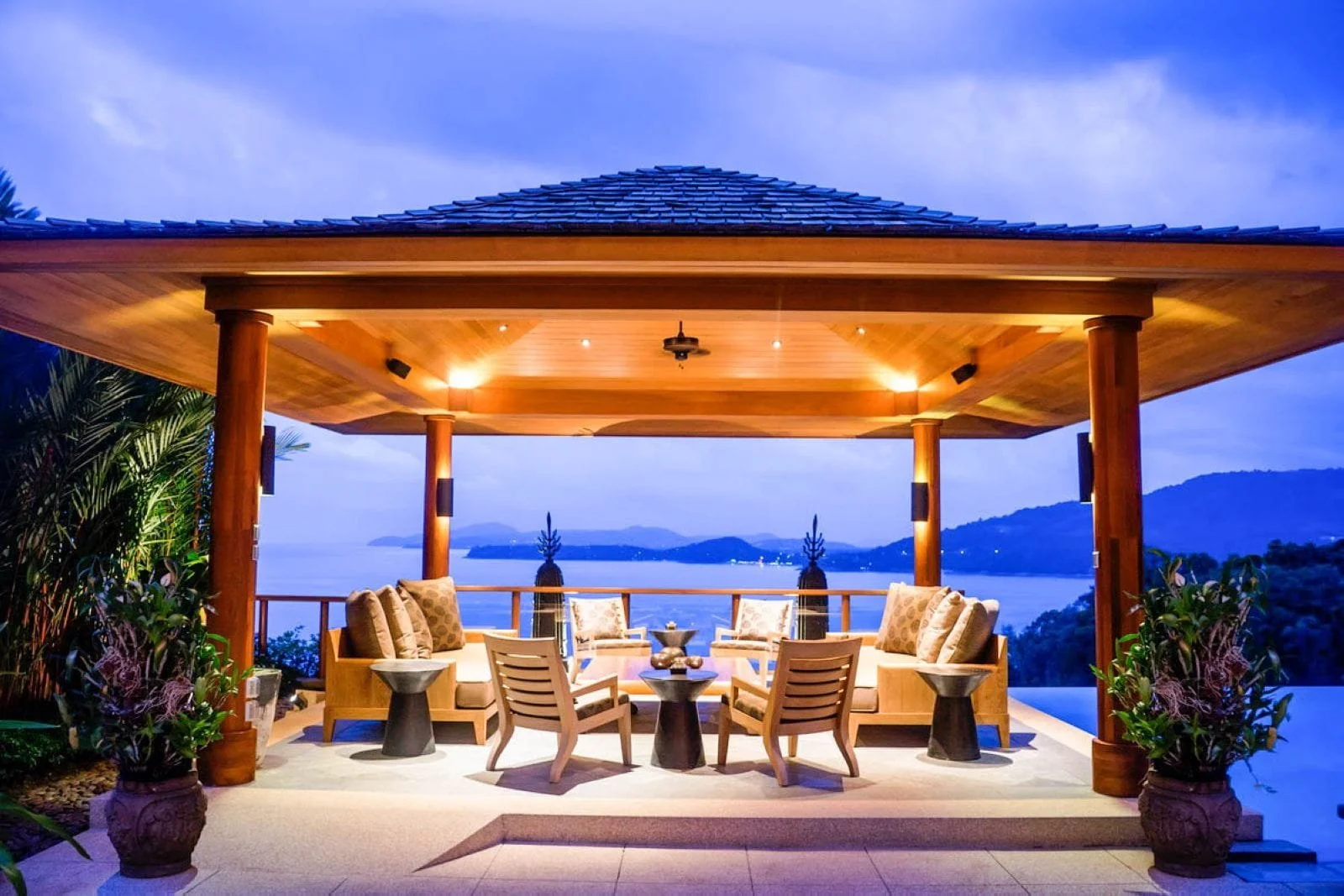
Andara – a polished hillside estate in Kamala developed by Allan Zeman, offering large-format sea-view villas with strong rental performance and consistent resale liquidity.
4.Andara Resort & Residences
Overview
Andara represents one of Phuket’s most successful examples of the integrated resort-residence model. Located on the hillside overlooking Kamala Bay, the development combines a five-star resort environment with privately owned residences ranging from luxury suites to large ocean-view villas. Opened in 2008, Andara helped establish Kamala as one of Phuket’s premier luxury residential areas. The estate integrates hospitality services, resort amenities, and private ownership within a single hillside development facing the Andaman Sea. Today, Andara remains one of the flagship luxury properties in Kamala, known for its scale, operational consistency, and strong integration between resort management and private residences.
Key Facts
Opening year: 2008
Location: Kamala hillside overlooking Kamala Bay
Estate composition: Approximately 60 residences
Residential mix: Around 40 luxury suites and roughly 25 private pool villas
Developer: Allan Zeman, Lan Kwai Fong Group
Expansion phase: Andara Signature villas positioned higher on the hillside
Typical pricing: Approximately USD 1.5M–2M for suites and up to USD 15M+ for larger villas
Why Andara Matters
Integrated resort-residential model
Andara combines privately owned residences with full five-star resort services, creating a seamless ownership and hospitality environment.Kamala luxury corridor
The development helped reinforce Kamala’s emergence as one of Phuket’s primary luxury residential zones.Proven hospitality management
The project maintains a strong operational reputation, combining resort amenities with consistent property management for owners.Established developer
Allan Zeman, founder of Hong Kong’s Lan Kwai Fong Group, brought international hospitality and lifestyle development experience to the project.
Ownership Culture
Ownership at Andara is closely tied to the resort environment. Many owners use their residences as private holiday homes while benefiting from the operational support of the resort’s hospitality infrastructure. Suites provide a more accessible entry point into the estate, while the private villas offer significantly larger living environments with expansive terraces, private pools, and panoramic views over Kamala Bay. The later Andara Signature villas introduced a smaller collection of very large standalone homes positioned higher on the hillside, adding a more exclusive residential tier within the broader development.
Market Position Today
Within Phuket’s luxury property market, Andara occupies a strong position as one of the island’s most established resort-residential developments. The estate offers a broad range of ownership options, from spacious one-bedroom suites and penthouses to large hillside villas with private pools and extensive outdoor living spaces. Compared to more tightly held legacy estates, Andara trades more regularly, which has contributed to clearer pricing benchmarks and a more active resale environment. Beyond Phuket, the development group has expanded its presence in the region through several additional projects. Aquella, located in Phang Nga just north of Phuket, is a large master-planned coastal development featuring beachfront residences, a golf course, beach club, and wellness facilities. More recently, the group launched Sudara in Bang Tao, a new residential condominium development that will operate under Andara management.
Notable Characteristics
Hillside setting overlooking Kamala Bay
Integrated five-star resort and private residential ownership
Approximately 60 residences combining suites and villas
Andara Signature villas positioned higher on the hillside
Developed by Allan Zeman of the Lan Kwai Fong Group
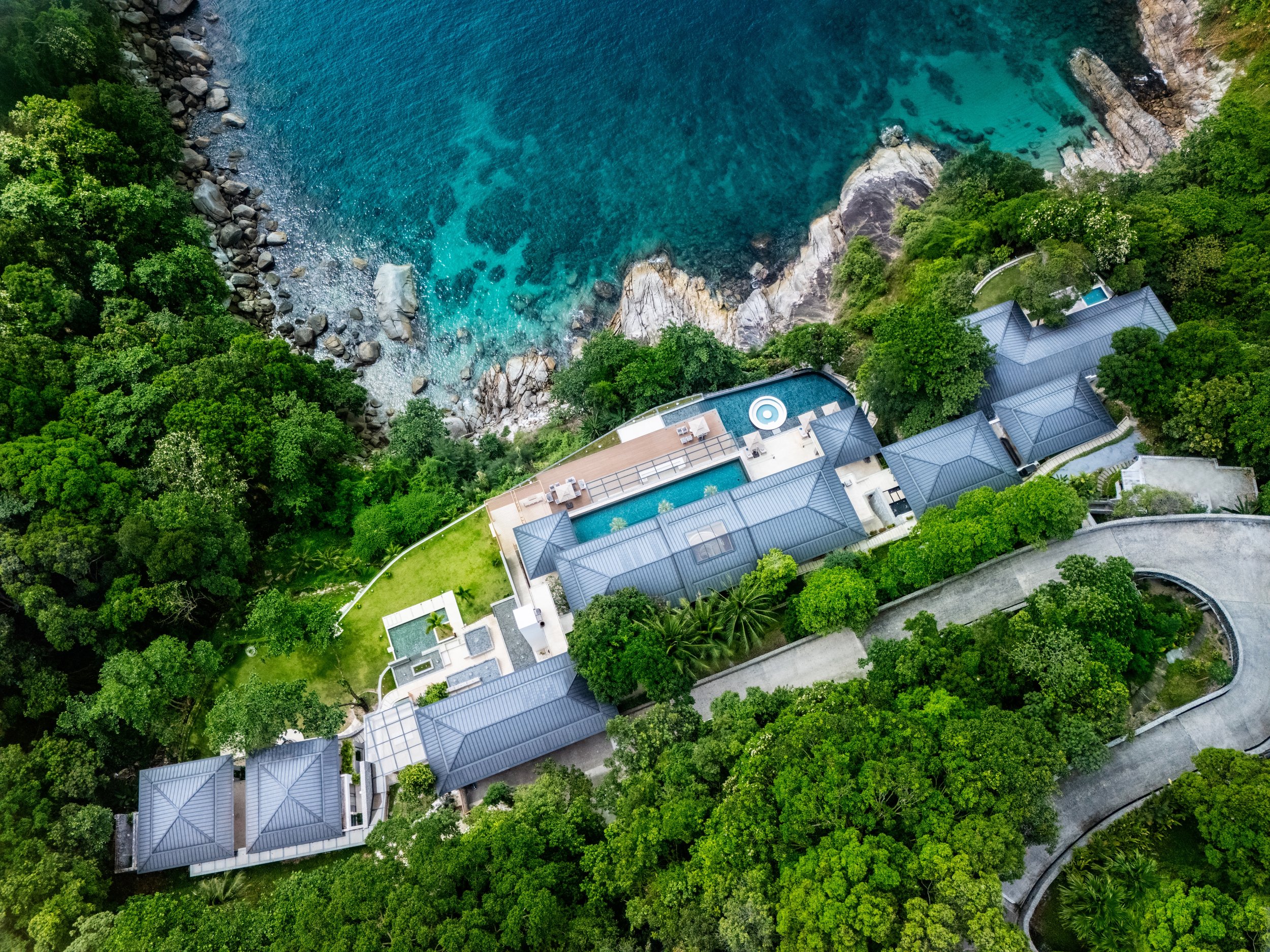
Millionaire’s Mile – Phuket’s most prestigious west-coast stretch, where cliffside oceanfront villas command uninterrupted sunset views and some of the island’s highest price points.
5.Millionaire’s Mile
Overview
Millionaire’s Mile refers to the dramatic stretch of coastline between Kamala and Patong Beach on Phuket’s west coast. Over the past two decades, this elevated ridge has become one of the island’s most recognized ultra-prime residential corridors, known for its steep cliffside positioning, large land plots, and expansive sunset views over the Andaman Sea. Unlike Phuket’s more structured master-planned estates, Millionaire’s Mile developed organically beginning in the late 1990s. Individual villas and boutique gated enclaves gradually appeared along the ridge, taking advantage of some of the island’s most dramatic coastal terrain. Today the area consists of a mix of smaller estates and standalone villas positioned along the Kamala headlands. Together they form one of Phuket’s most prestigious luxury villa corridors.
Key Facts
Location: West coast of Phuket between Kamala and Patong
Development period: Late 1990s to present
Estate structure: Multiple boutique estates and standalone villas
Topography: Steep coastal ridge overlooking the Andaman Sea
Notable estates: Samsara Estate, Cape Amarin Estate, Waterfall Bay
Architectural contributors: Various international architects including Martin Palleros
Typical villa pricing: Approximately USD 4M to USD 20M+ depending on scale and positioning
Why Millionaire’s Mile Matters
Exceptional cliffside positioning
Villas sit high above the Andaman Sea with uninterrupted sunset views and dramatic coastal exposure.Large hillside land plots
The ridge allowed for substantial villas with expansive terraces and panoramic ocean views.Organic development pattern
The area evolved gradually through a mix of independent villas and boutique estates rather than a single master-planned development.Architectural diversity
The steep terrain encouraged bold contemporary villa design and highly individualized residences.
Ownership Culture
Millionaire’s Mile is characterized by privacy and individuality. Most villas operate as fully private residences rather than part of resort-managed estates. Ownership is typically discreet, and properties trade periodically as part of the island’s active luxury villa market. Buyers are often attracted by the ability to own a large standalone villa in one of Phuket’s most dramatic coastal settings. Because the corridor developed across multiple land parcels over time, architectural styles vary widely. Villas range from contemporary glass-fronted residences to more traditional tropical designs, reflecting the different architects and owners involved in their creation.
Market Position Today
Within Phuket’s luxury property market, Millionaire’s Mile remains one of the island’s most recognized ultra-prime residential zones. Unlike tightly controlled estates, the corridor functions as a fragmented but highly desirable collection of independent assets, where pricing, quality, and liquidity vary significantly from one property to another. Several estates within the corridor have become particularly well known. Samsara Estate occupies a prominent position on the Nakalay headland and contains a small collection of contemporary villas overlooking the sea. Cape Amarin Estate represents one of the earlier luxury villa developments along the ridge and remains one of the most established enclaves in the area. Waterfall Bay is another notable enclave, home to Villa Mayavee, a dramatic cliffside residence designed by architect Martin Palleros of Tierra Design. Across the corridor, villas such as Villa Aquila and Villa Cascade have become reference points within Phuket’s luxury villa market for their scale, architecture, and commanding oceanfront locations. This overview is not intended to represent a comprehensive list of every development along the Kamala headlands, but rather to highlight the estates that have shaped its reputation as one of Phuket’s most exclusive villa corridors.
Notable Characteristics
Dramatic cliffside ridge overlooking the Andaman Sea
Ultra-private villas positioned along the Kamala headlands
Boutique estates including Samsara, Cape Amarin, and Waterfall Bay
Landmark villas such as Villa Mayavee, Villa Aquila, and Villa Cascade
Wide architectural diversity reflecting individual owners and architects
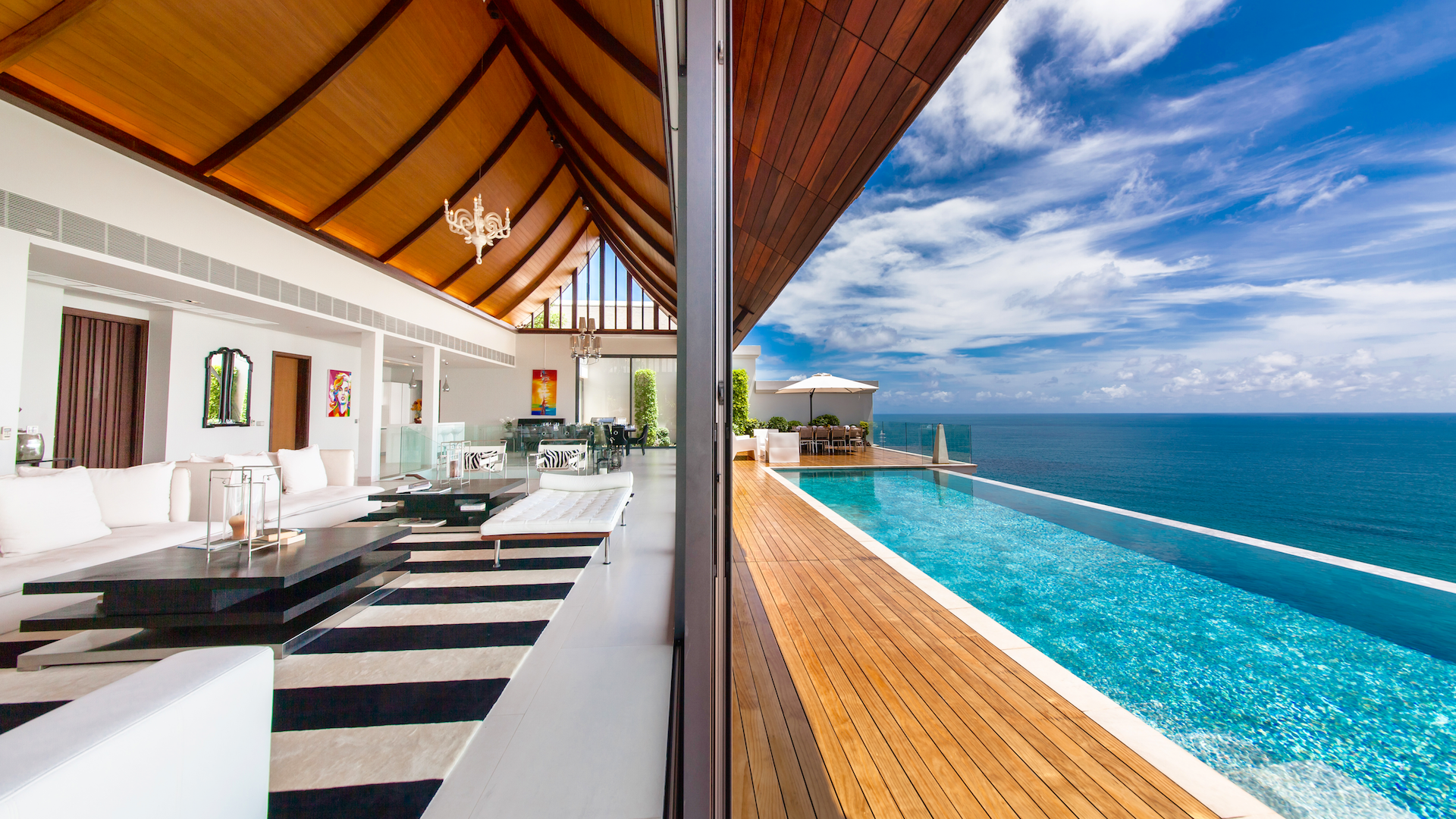
Malaiwana – a hillside estate above Naithon Beach defined by clean Thai contemporary architecture, and strong appeal for both lifestyle use and rentals.
6.Malaiwana
Overview
Malaiwana is a luxury residential estate located on the hillside above Naithon Beach on Phuket’s northwest coast. The development is known for its strong architectural identity, particularly the dramatic pitched rooflines that define many of its signature villas. These villas combine contemporary tropical architecture with traditional Thai roof forms, creating a recognizable design language across the estate. The steep roof structures and open pavilion layouts give the villas a striking presence on the hillside. Alongside these villas, the estate also includes several more contemporary residential buildings. These adopt a cleaner, more geometric architectural style and house duplex residences and penthouse apartments designed to capture panoramic views over the Andaman Sea.
Key Facts
Location: Hillside above Naithon Beach, northwest Phuket
Development period: Early 2010s, largely completed around 2015
Developer: Stephen Paine
Property types: Private pool villas, duplex residences, penthouse apartments
Estate scale: Boutique hillside development
Typical pricing: Villas approximately USD 4M–5M; residences generally below that level depending on size and positioning
Why Malaiwana Matters
Recognizable pitched-roof architecture
Many of the villas feature steep rooflines inspired by traditional Thai design, creating one of the most distinctive silhouettes among Phuket’s modern developments.Elevated coastal views
The hillside above Naithon Beach allows most residences to capture expansive sunset views over the Andaman Sea.Limited development scale
The relatively small number of villas and residences keeps supply constrained.
Ownership Culture
Malaiwana functions primarily as a private residential estate rather than a resort-managed development. Owners typically use the properties as holiday homes or private residences. Some villas and residences are rented on a short-term basis through luxury villa rental agencies, often with full staffing including chef, housekeeping, and villa management. Unlike integrated resort estates, rental activity is generally managed independently rather than through a single centralized program.
Market Position Today
Within Phuket’s luxury property market, Malaiwana represents a newer generation of architecturally driven hillside estates. The development was created by Stephen Paine, who is also known for Surin Heights on Phuket’s west coast. Compared to larger resort-integrated developments, Malaiwana occupies a more niche position, appealing to buyers who prioritize design coherence and architectural identity over brand-driven hospitality infrastructure. Today the estate includes a mix of large pitched-roof villas and contemporary residential buildings containing duplex units and penthouses, all oriented toward the Andaman Sea above Naithon Beach.
Notable Characteristics
Signature pitched-roof villas inspired by Thai architecture
Contemporary duplex and penthouse buildings with a more geometric design
Hillside location overlooking Naithon Beach
One of Phuket’s most cohesive modern residential estates developed in the 2010s
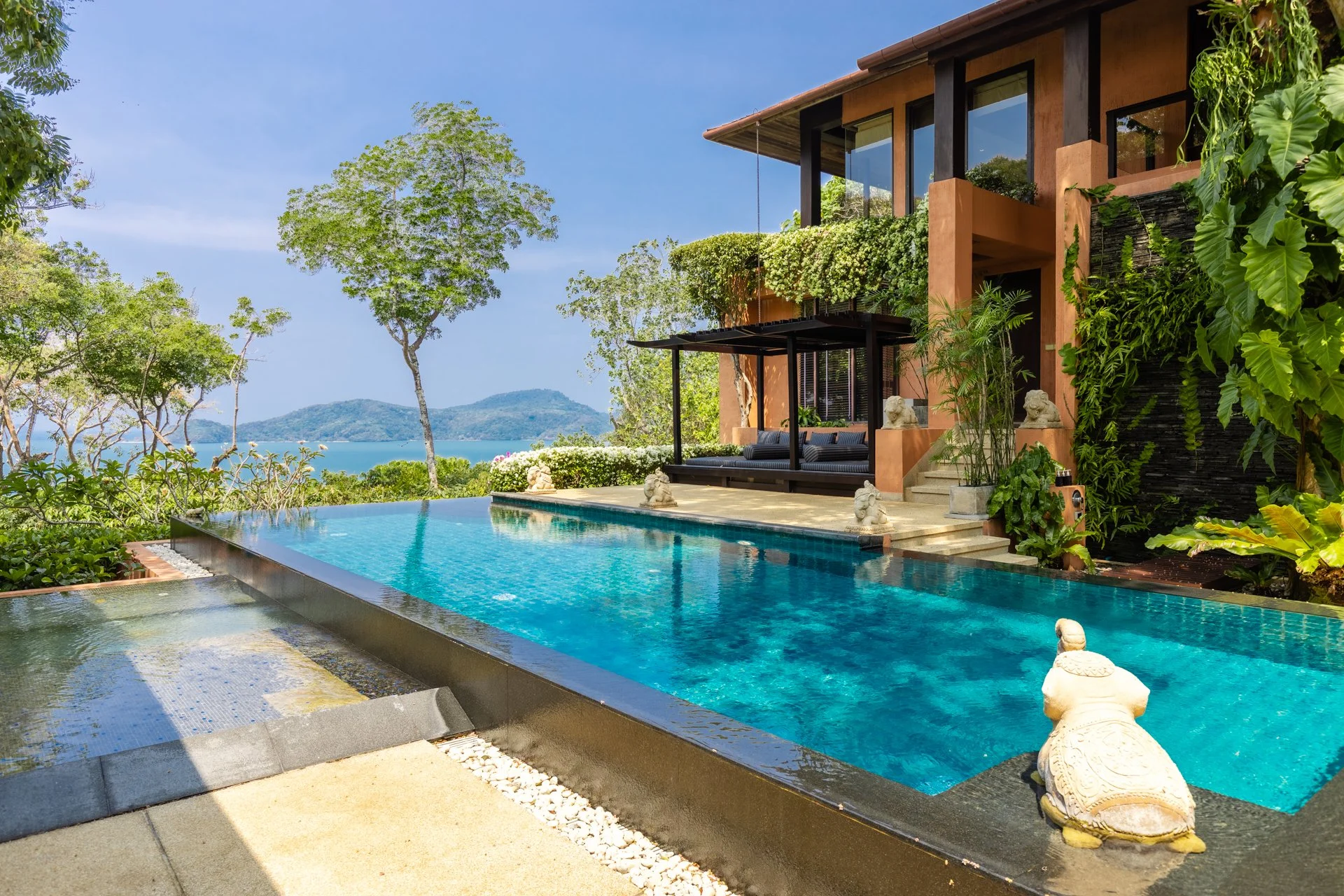
Sri Panwa – a branded oceanfront estate on Cape Panwa, known for its integrated hotel component and unique peninsula positioning with panoramic views on Phuket’s quieter southeast coast.
7.Sri Panwa
Overview
Sri Panwa is one of Phuket’s most recognizable integrated luxury resorts, located on the southeastern tip of the island at Cape Panwa. Developed across a steep coastal hillside overlooking the Andaman Sea, the estate combines a five-star resort environment with privately owned pool villas. The project began development in the early 2000s and opened in phases, with the resort gaining international attention after the launch of Baba Nest, its rooftop sunset bar, which quickly became one of Phuket’s most photographed viewpoints. Because Cape Panwa remained largely untouched during Phuket’s earlier tourism expansion, the estate benefits from an unusually private coastal setting while still being within reach of Phuket Town and the island’s infrastructure. Today Sri Panwa remains the flagship luxury resort in the Cape Panwa area.
Key Facts
Location: Cape Panwa, southeast Phuket
Development period: Early 2000s with major expansion phases through the 2010s
Estate type: Integrated five-star resort with private villas
Developer: Charn Issara Group
Property types: Private pool villas, resort villas, residential villas
Signature venue: Baba Nest rooftop sunset bar
Facilities: Restaurants, beach club, tennis courts, wellness facilities, private beach access
New development: Sky Series villas currently under construction
Typical pricing: New Sky Series villas generally above USD 5M
Why Sri Panwa Matters
Flagship resort of Cape Panwa
The estate effectively defines the luxury hospitality and residential market in this part of the island.Integrated lifestyle environment
Owners benefit from a full-service resort including restaurants, beach club facilities, wellness areas, and sports amenities.Strong domestic following
The resort has long been particularly popular with Thai high-net-worth guests and buyers.Iconic sunset destination
Baba Nest has become one of Phuket’s most famous sunset locations and a landmark venue for the island.
Ownership Culture
Sri Panwa operates as a hybrid between a luxury resort and a residential estate. Some villas remain part of the resort’s hospitality inventory, while others are privately owned residences. Owners typically retain private usage while also benefiting from the broader resort infrastructure and services. The estate attracts buyers who prefer an active resort environment rather than the quieter atmosphere associated with some of Phuket’s ultra-private villa estates. Ownership historically includes a mix of Thai and international buyers.
Market Position Today
Within Phuket’s luxury property market, Sri Panwa represents one of the island’s most established resort-driven residential developments. Compared to more discreet west-coast estates, it operates with a higher level of visibility and activity, functioning as both a lifestyle destination and a residential environment. The project was developed by the Charn Issara Group, a long-standing Thai property developer with projects in Bangkok and across Thailand. The group also operates hospitality concepts under the Baba brand, including Baba Beach Club properties in Natai and Cha-am. More recently, the estate has introduced a new collection of hillside villas known as the Sky Series. Positioned higher on the ridge, these residences are designed to capture expansive sea views and represent the latest phase of residential development within the Sri Panwa estate.
Notable Characteristics
Integrated five-star resort environment at Cape Panwa
Private pool villas combined with full hospitality infrastructure
Baba Nest rooftop bar, one of Phuket’s most famous sunset viewpoints
Popular venue for weddings, celebrations, and large social gatherings
New Sky Series villas representing the estate’s latest expansion phase
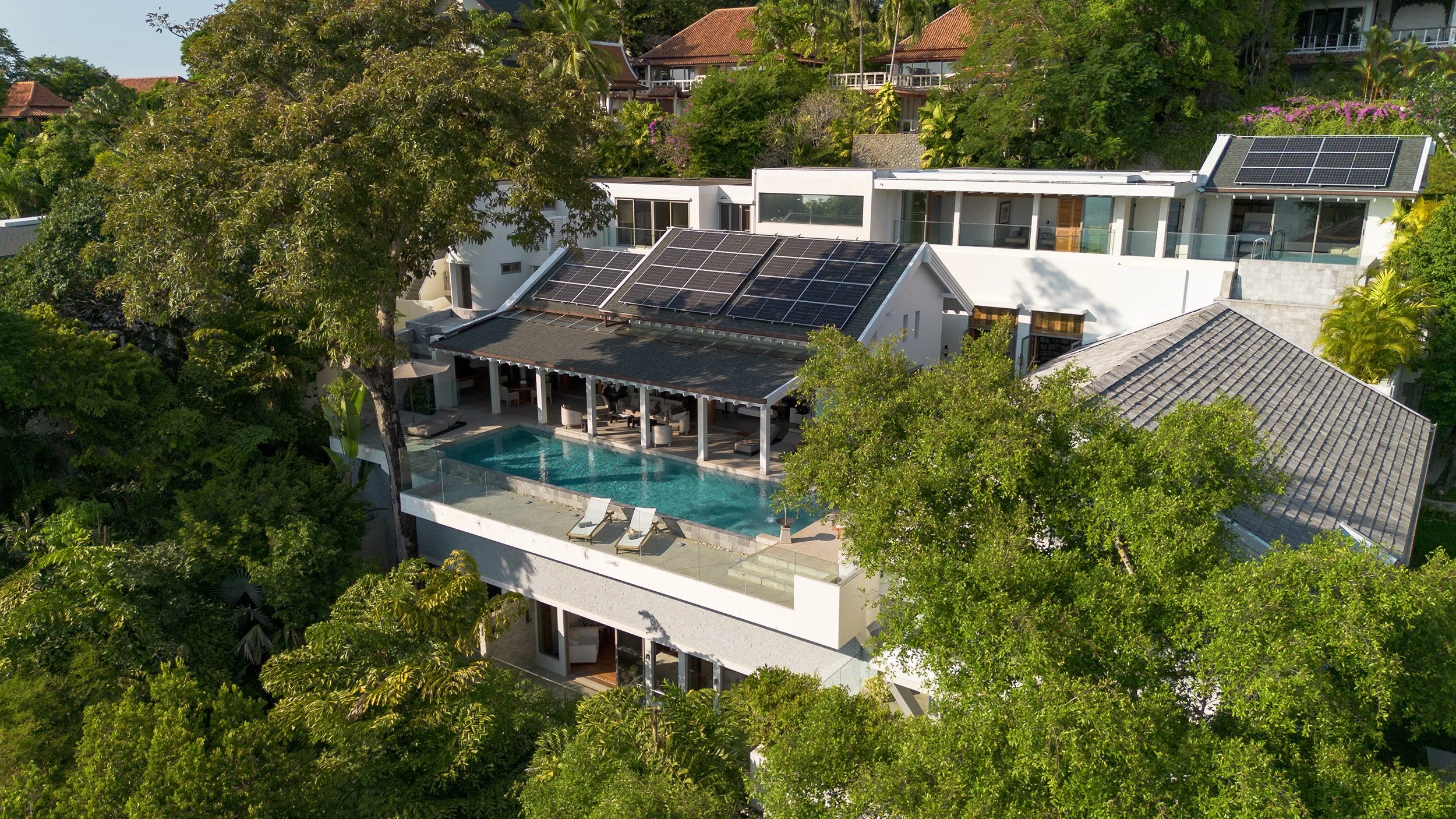
Katamanda – the premier estate in Kata, offering direct walking access to Kata Noi Beach, mature tropical landscaping, and a well-managed residential environment.
8.Katamanda
Overview
Katamanda is a private villa estate located on the headland between Kata Beach and Kata Noi Beach on Phuket’s southwest coast. Positioned above Kata Noi, the estate enjoys convenient access to the beach via a staircase leading down to the shoreline. Developed during Phuket’s early luxury property expansion in the 1990s, Katamanda was conceived as a gated residential enclave rather than a resort. The estate consists of individually owned villas arranged along the hillside within mature landscaped gardens overlooking the Andaman Sea. Because of its position between Kata and Kata Noi, the estate remains one of the defining residential properties in the Kata area.
Key Facts
Location: Headland between Kata Beach and Kata Noi Beach, southwest Phuket
Development period: 1990s
Estate type: Private gated villa estate
Property types: Individually owned private villas
Ownership structure: Protected leasehold structures, occasionally combined with offshore holding entities above the Thai landholding structure
Facilities: Tennis court, communal swimming pool, estate management, landscaped grounds
Beach access: Stair access to Kata Noi Beach
Typical pricing: Below USD 1M for smaller villas to USD 5M+ for the largest front-row properties
Why Katamanda Matters
Direct proximity to Kata Noi Beach
Few estates in Phuket sit within such close walking distance of one of the island’s most desirable beaches.Mature landscaped environment
The estate is known for its established tropical gardens and peaceful residential setting.Early luxury residential development
Katamanda represents one of the earlier generations of villa estates developed on Phuket’s west coast.Prime ridge positioning
A small number of villas along the front ridge enjoy expansive views over Kata Noi Bay.
Ownership Culture
Katamanda operates as a private residential estate rather than a resort-managed development. Villas are individually owned and used primarily as private holiday homes, though some properties are rented on a short-term basis through luxury villa rental agencies. Because the estate developed over time and villas have been renovated or rebuilt by different owners, there is significant variation in architectural style, scale, and quality across the development. Within the estate, a small number of larger front-row villas overlooking Kata Noi stand apart in terms of size and positioning.
Market Position Today
Within Phuket’s luxury property market, Katamanda occupies a distinctive niche due to its location directly above Kata Noi Beach. Compared to newer, more uniform developments, the estate presents a wider spread in pricing and quality, with opportunities often driven by renovation potential rather than turnkey product. The estate also sits within a cluster of notable developments along the Kata headland. Nearby is Baan Kata, a charming residential enclave historically associated with Mom Tri Devakul, who developed several influential hospitality projects in the area. Adjacent to Katamanda is Kata Rocks, a contemporary luxury resort and residence development known for its white, yacht-inspired architecture and dramatic sunset views. The property has gained international recognition for its annual Superyacht Rendezvous and its strong visual identity overlooking Kata Bay.
Notable Characteristics
Gated hillside estate overlooking Kata Noi Beach
Stair access to the beach below
Mature landscaped tropical gardens
Mix of villa sizes and architectural styles
Several prime front-row villas with commanding sea views
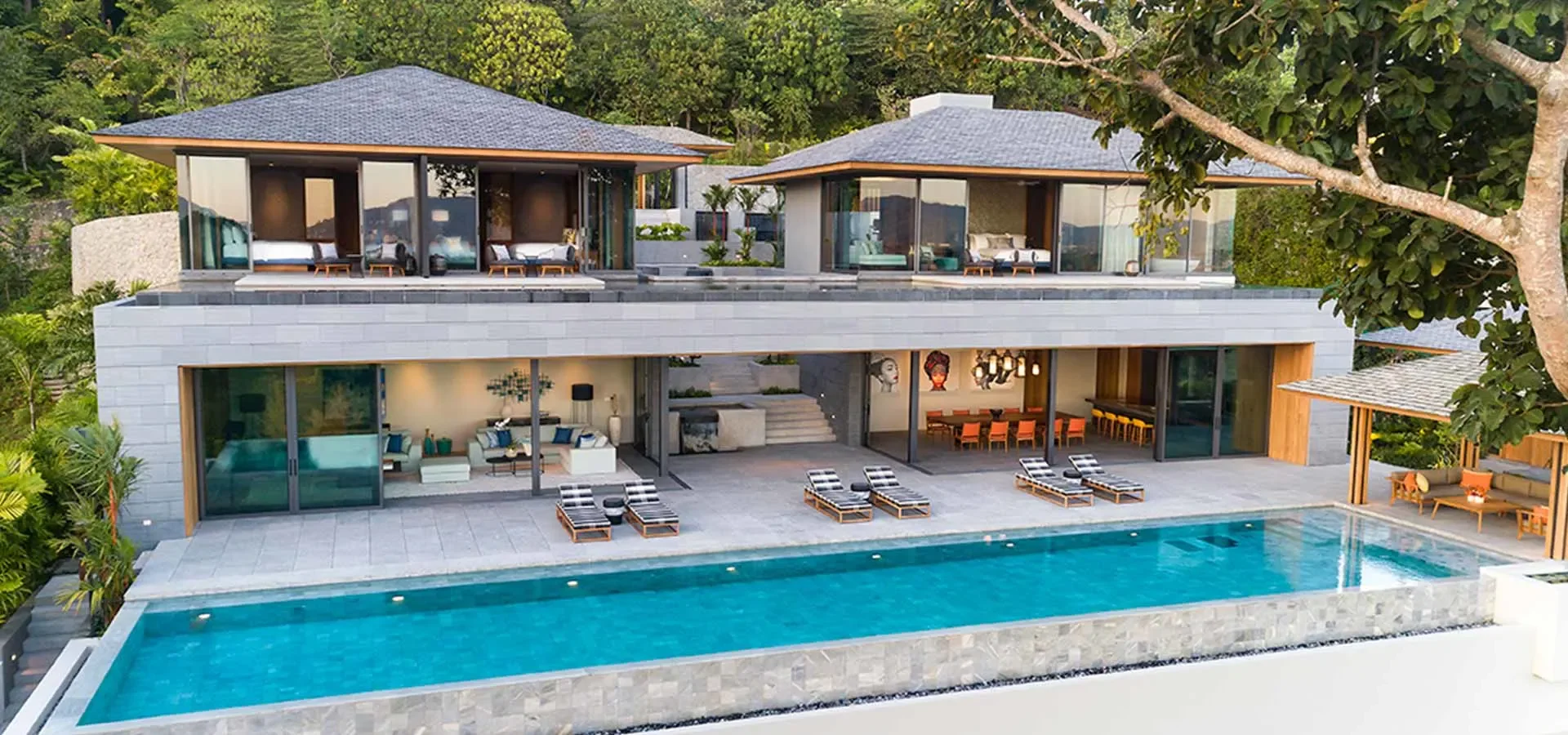
Avadina Hills – a branded hillside residence above Layan by Anantara and entrepreneur Bill Heinecke, combining contemporary design with resort-level management and privacy.
9.Avadina Hills by Anantara
Overview
Avadina Hills is one of Phuket’s most ambitious contemporary villa estates, located on a secluded hillside above Layan Beach on the island’s northwest coast. The development forms part of the broader Anantara Layan resort area and represents a newer generation of ultra-prime residential projects centered on modern architecture, privacy, and expansive land plots. Development of Avadina Hills began in the late 2010s, with the first villas completed shortly thereafter. While the estate is now largely established, additional villas have continued to be delivered over time as the final plots within the development are built out. The villas occupy a forested ridge overlooking the Andaman Sea, each positioned to capture sweeping sunset views while maintaining significant separation from neighboring residences. Architecturally, Avadina Hills departs from the traditional tropical style seen in many earlier Phuket estates. The villas adopt a bold contemporary language characterized by strong horizontal lines, expansive glass façades, and large cantilevered roof structures that create dramatic indoor-outdoor living spaces. Interior design for the villas was created by the late Ibrahim Jaya, whose work introduced a refined contemporary aesthetic across the residences.
Key Facts
Location: Hillside above Layan Beach, northwest Phuket
Development period: Late 2010s to present
Estate type: Ultra-luxury private villa estate
Developer: Minor International / Minor Group
Founder: Bill Heinecke
Architect: Habita Architects (Singapore)
Interior design: Ibrahim Jaya
Property types: Large contemporary private pool villas
Estate scale: Originally planned for around fifteen villas, with additional villas delivered over time
Typical pricing: Around USD 15M depending on scale and positioning
Related developments: Anantara Layan Residences and the newer Kiara project nearby
Why Avadina Hills Matters
Contemporary architectural statement
The villas introduce a distinctly modern design language rarely seen in earlier Phuket estates.Ultra-low density hillside estate
Large plots and careful positioning ensure significant privacy between residences.Integration with Anantara Layan
Owners benefit from proximity to the five-star Anantara Layan Phuket Resort and its hospitality infrastructure.Ultra-prime positioning
The scale of the villas and the level of privacy place the estate firmly in the top tier of Phuket’s luxury residential market.
Ownership Culture
Avadina Hills functions as a private residential enclave connected to the broader Anantara Layan resort environment. Villas are individually owned and typically used as private residences or seasonal homes. Owners may access resort services through the Anantara infrastructure while maintaining full privacy within their properties. Ownership structures generally follow formats common to luxury Phuket developments, typically involving protected leasehold arrangements combined with corporate holding structures depending on the buyer.
Market Position Today
Within Phuket’s luxury property market, Avadina Hills sits firmly in the ultra-prime category. Compared to earlier legacy estates, it represents a newer generation of product, defined by modern architecture, larger built volumes, and a more contemporary interpretation of tropical living. The project was developed by Minor International, the hospitality group founded by entrepreneur Bill Heinecke, whose portfolio includes the Anantara, Avani, Tivoli, and NH hotel brands across multiple continents. Beyond hospitality, Minor Group operates one of Thailand’s largest restaurant networks, with brands including The Pizza Company, Swensen’s, Dairy Queen Thailand, and Burger King Thailand. Avadina Hills forms part of a broader luxury cluster around the Anantara Layan resort, which also includes Anantara Layan Residences and the newer adjacent development known as Kiara.
Notable Characteristics
Ultra-modern hillside villas overlooking Layan Beach
Architecture by Habita Architects
Interiors by Ibrahim Jaya
Developed by Minor International and Bill Heinecke
Very low-density ridge development
Part of the broader Anantara Layan luxury cluster
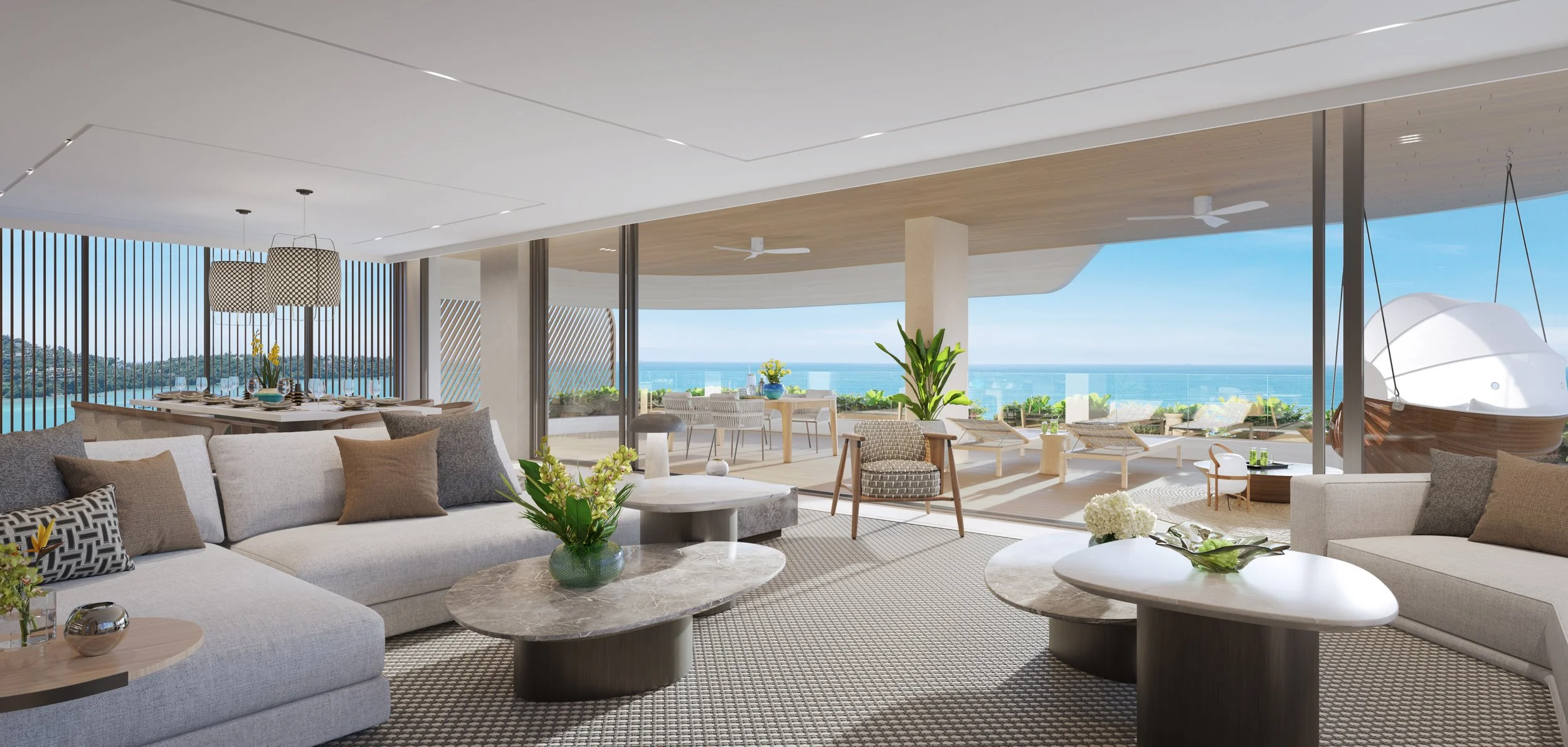
Laguna and Banyan Tree – Phuket’s largest master-planned estate, anchored by golf courses, lakes, and integrated resort infrastructure across the island’s most extensive residential zone.
10.Laguna Phuket / Banyan Tree Residences
Overview
Laguna Phuket is one of the island’s most significant master-planned resort developments, located along Bang Tao Beach on Phuket’s northwest coast. Built on the site of former tin mines, the project transformed a large stretch of previously industrial land into an integrated resort district combining luxury hotels, residential communities, retail areas, and recreational facilities. Development began in the early 1990s with the launch of Banyan Tree Phuket, the flagship resort that helped establish the global Banyan Tree hospitality brand. Over time the estate expanded into a large multi-brand destination with several hotels, residential enclaves, golf course communities, and beachfront developments. Today the Laguna district sits at the center of the Bang Tao–Layan corridor, which has evolved into one of Phuket’s most active residential and lifestyle zones.
Key Facts
Location: Bang Tao Beach, northwest Phuket
Development period: Early 1990s to present
Estate type: Integrated resort and residential masterplan
Developer: Banyan Group (formerly Banyan Tree Holdings)
Origins: Redevelopment of former tin mining land
Major hotel brands within the district: Banyan Tree, Angsana, Garrya, Dusit Thani
Core resort infrastructure: Laguna Golf Phuket, lakes, landscaped gardens, beach clubs, retail and dining areas
Residential types: Golf course villas, lagoon villas, branded beachfront residences
Typical pricing: Around USD 1M for villas within the estate to USD 10M+ for prime beachfront residences
Why Laguna Phuket Matters
Landmark resort masterplan
The estate introduced a large-scale integrated resort model combining hospitality, residential ownership, and leisure infrastructure.Rehabilitation of former tin mines
The project converted degraded mining land into lakes, gardens, and resort landscapes.Birthplace of a global hospitality brand
Banyan Tree’s flagship resort opened here before the group expanded internationally.Center of northwest Phuket’s lifestyle district
The surrounding Bang Tao and Layan area has become the island’s most dynamic residential corridor.
Ownership Culture
Laguna hosts a wide spectrum of residential ownership within a structured resort environment. Legacy villas surrounding the golf course and lagoon areas remain popular with long-term owners and repeat visitors. Many properties are used as holiday homes, while others participate in managed rental programs connected to the resort infrastructure. Buyer demographics in the broader Bang Tao area have evolved significantly over the past decade. Entry-level villas and condominiums in the surrounding corridor have proven particularly popular with buyers from Russia and the wider CIS region. At higher price points within Laguna itself, particularly for larger villas or beachfront branded residences, the buyer mix becomes more internationally diversified.
Market Position Today
Within Phuket’s property market, Laguna and the surrounding Bang Tao–Layan corridor have emerged as the island’s most active residential zone. Unlike more tightly held legacy estates, the area is characterized by high transaction volume, continuous new supply, and a broad spectrum of price points. Over the past several years, more than eighty residential projects have launched across the broader area, reflecting strong international demand for property in northwest Phuket. During the same period, land values in the corridor have increased significantly as infrastructure and lifestyle amenities have expanded. The area now includes a dense concentration of retail, dining, and leisure venues, particularly around Boat Avenue and Porto de Phuket, which have become major social and lifestyle hubs for residents. Within the Laguna estate itself, residential offerings range from golf course villas and lagoon residences to newer beachfront developments under the Banyan Tree brand.
Notable Characteristics
Large integrated resort district built on former tin mining land
Flagship Banyan Tree resort that helped launch the global brand
Multiple hospitality brands including Angsana, Garrya, and Dusit Thani
Championship golf course surrounded by residential villas
Extensive lakes, landscaped gardens, and internal resort infrastructure
Located within the Bang Tao–Layan corridor, Phuket’s fastest-growing residential zone
Phuket’s luxury market is not uniform, and most properties are not directly comparable.
At the very top end, estates like Amanpuri sit in a category of their own, with extremely limited supply and no true comparables. Pricing is not driven by listings, but by rarity and timing.
Across the rest of the market, values vary depending on location, estate structure, and how frequently properties actually trade.
That distinction is what ultimately defines value in Phuket.